oeoo in Indonesia
21. October 2020 2026-02-07 13:54oeoo in Indonesia
In cooperation with the Schwarz Group PT Waste4Change
Three SeeHamster in Indonesia
In cooperation with the Schwarz Group (Lidl, Kaufland, PreZero) and the local NGO
PT Waste4Change Alam Indonesia (W4C), oeoo has launched a joint river cleanup project in the city of Bekasi in Java/Indonesia.
The waste collection project is initially planned for a three-year period, with overall project management led by oeoo.
The Schwarz Group not only finances the overall project including the corresponding SeeHamster collection vessels as well as other equipment, training of project participants and the recycling of the collected plastics, but also contributes their expertise on the topic of recycling.
The third partner, PT Waste4Change Alam Indonesia (W4C), is a local specialist in waste management and circular economy systems and brings extensive regional knowledge and operational experience.
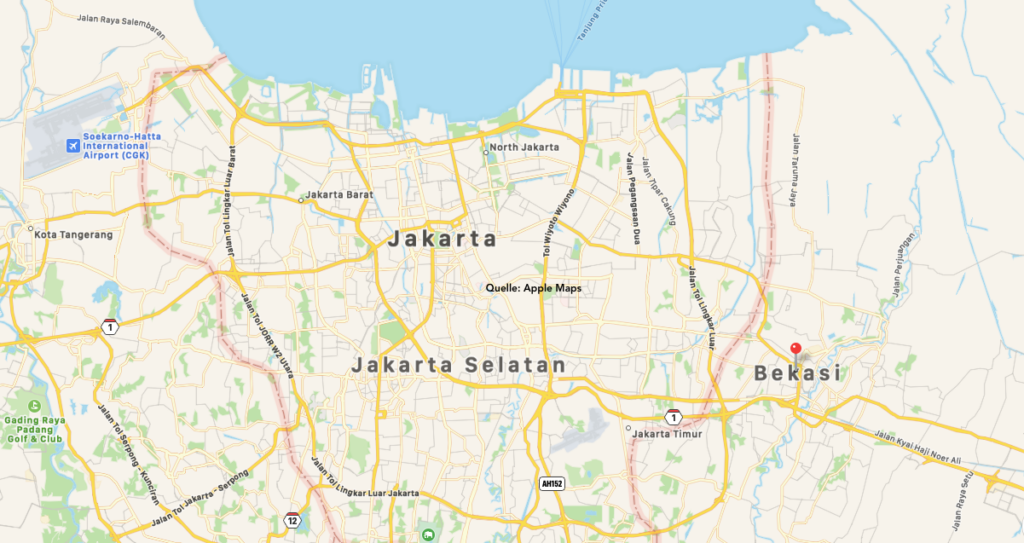
The industrial metropolis of Bekasi, about 40 kilometers southeast of central Jakarta, is home to about 2.9 million people (as of 2018) and is located in one of Indonesia’s most heavily polluted regions.
Nearby lies Bantar Gebang, Indonesia’s largest landfill, which has received most of Jakarta’s waste since the early 1990s.
The Citarum River also flows through the surrounding area and is often referred to as one of the most polluted rivers in the world. It is heavily contaminated by chemicals from textile factories, as well as by household and industrial waste. Due to the lack of a regulated waste management system and reliable access to clean drinking water, the river has become both a primary water source for local communities and a dumping ground for waste.
Our joint river cleanup project with the Schwarz Group on the island of Java officially launched in March 2021. The rivers surrounding the metropolis of Bekasi on the outskirts of Jakarta are heavily polluted with (plastic) waste. The project was originally supposed to start in spring 2020, but a flood and he COVID-19 pandemic caused delays.
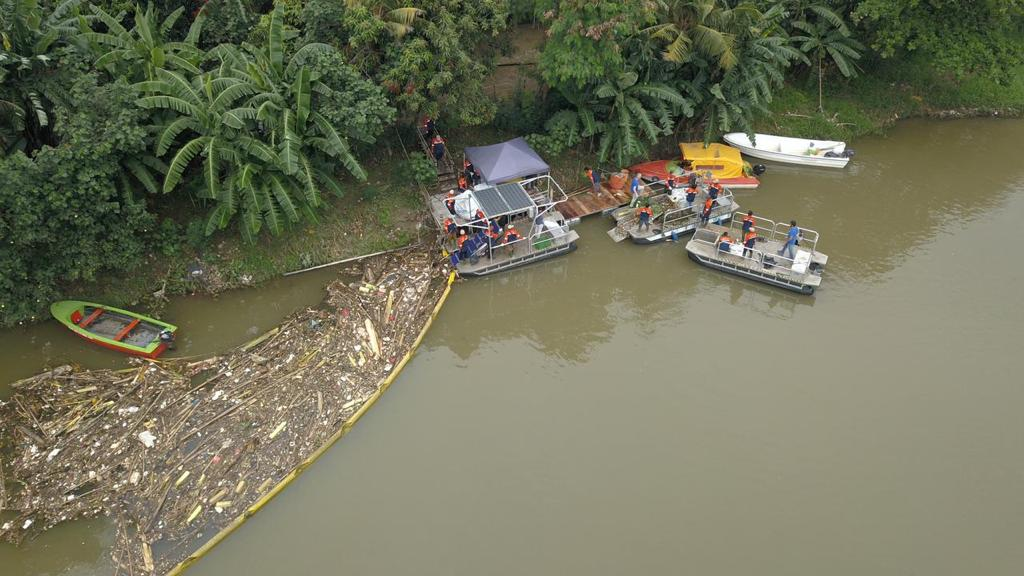
As a result, two more new SeeHamsters could only be put into operation in November 2021. The three catamarans are each equipped with different waste collection technology to to address varying conditions in the river and along the riverbanks. A ramp, a conveyor belt, and a large collection basket allow the crews to work as efficiently as possible. For example, a SeeHamster can collect floating waste directly from the water using a solar-powered conveyor belt and can operate both as a mobile unit or in a stationary setup in combination with a floating barrier installed across the river.
To minimize emissions, this project marks the first time that only SeeHamsters equipped with fully electric propulsion systems are being used. The electric drives are charged exclusively via photovoltaic power.
In November 2021, oeoo members Dr. Harald Frank and Paul Marbach were on site to oversee key components of the project, including the installation of a solar-powered charging station for the SeeHamsters’ electric outboard motors.
In addition, the construction of the Base Camp on the riverbank was completed. It consists of a converted shipping container that houses the technical equipment and an office workspace, as well as additional areas for waste sorting and temporary storage.
25 square meters of photovoltaic panels were installed on the roof to provide electricity for all three electrically powered SeeHamster waste collection boats.
We still support our project in 2026