The SeeHamster
21. October 2020 2026-01-07 11:00The SeeHamster
The SeeHamster
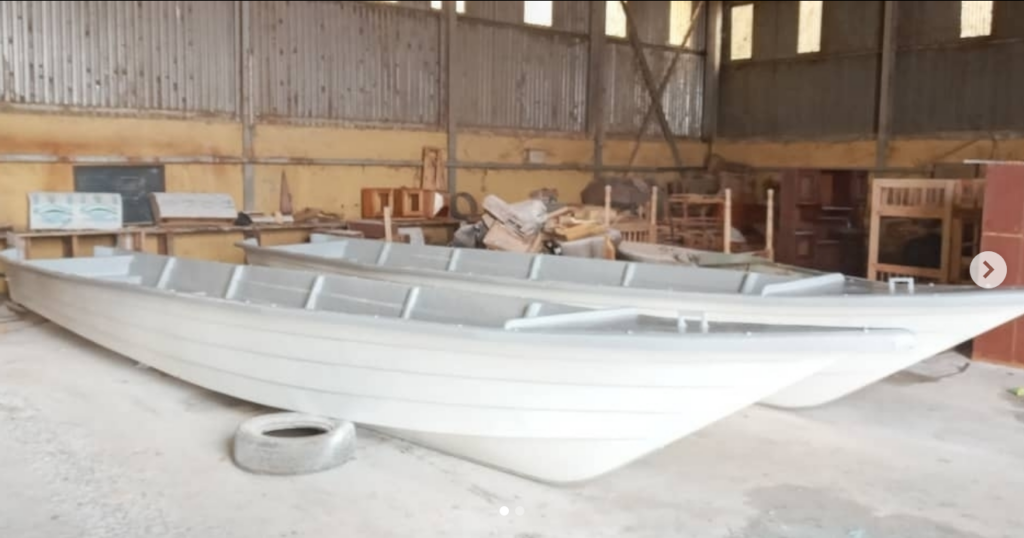
SeeHamsters are the smallest units of the “maritime waste collection” vehicles, compact catamarans with a length of about 4.5 meters and a width of 2 meters, as well as a shallow draft.
In 2012, they were the first practical implementation to test the functionality of the collection concept in real life. SeeHamsters are used worldwide in inland waters such as lakes and rivers.
Initially, SeeHamster worked with a fold-out fishing net to collect (plastic) waste. Over the years, the cleaning concept has been adapted to local needs: ramp and conveyor belt constructions are now also in use. SeeHamsters have a collection capacity of up to 500 kg.
In 2020, the fifth, improved generation of SeeHamster ships was put into operation in Cambodia.
Until now, they have been powered by conventional outboard motors. The project on Java will be the first to use electric motors powered by solar energy.
SeeHamsters are currently in use in Germany, Cambodia, Indonesia, and Egypt. The largest SeeHamster – SeeHamster 6, measuring 3 x 6 meters – is intended for the new project in the Philippines.
At the beginning of 2023, another model will was built in Uganda for use on Lake Victoria. This SeeHamster is 9 meters long and 5 meters wide – almost as big as a manatee. The hulls of the catamaran were built on site.

SeeHamster are currently in use in Germany, Cambodia, Indonesia and Egypt. The largest one – SeeHamster 6 with 3 x 6 metres – is intended for the new project in the Philippines.
At the beginning of 2023, another model will be built in Uganda for use on Lake Victoria. This SeeHamster will be 9 m long and 5 m wide – almost the dimensions of a sea cow. The hulls of the catamaran are already under construction on site.
The first model of the SeeHamster 1 – an idea begins to take shape.